Naples Reimagined brings my Naples Gateway thesis into a larger mission: connect the city through its water, walkable districts and architecture that gives people a reason to gather. I want to make beautiful, useful and lasting places shaped by the people who live and work here, beginning with Tin City and the Design District.
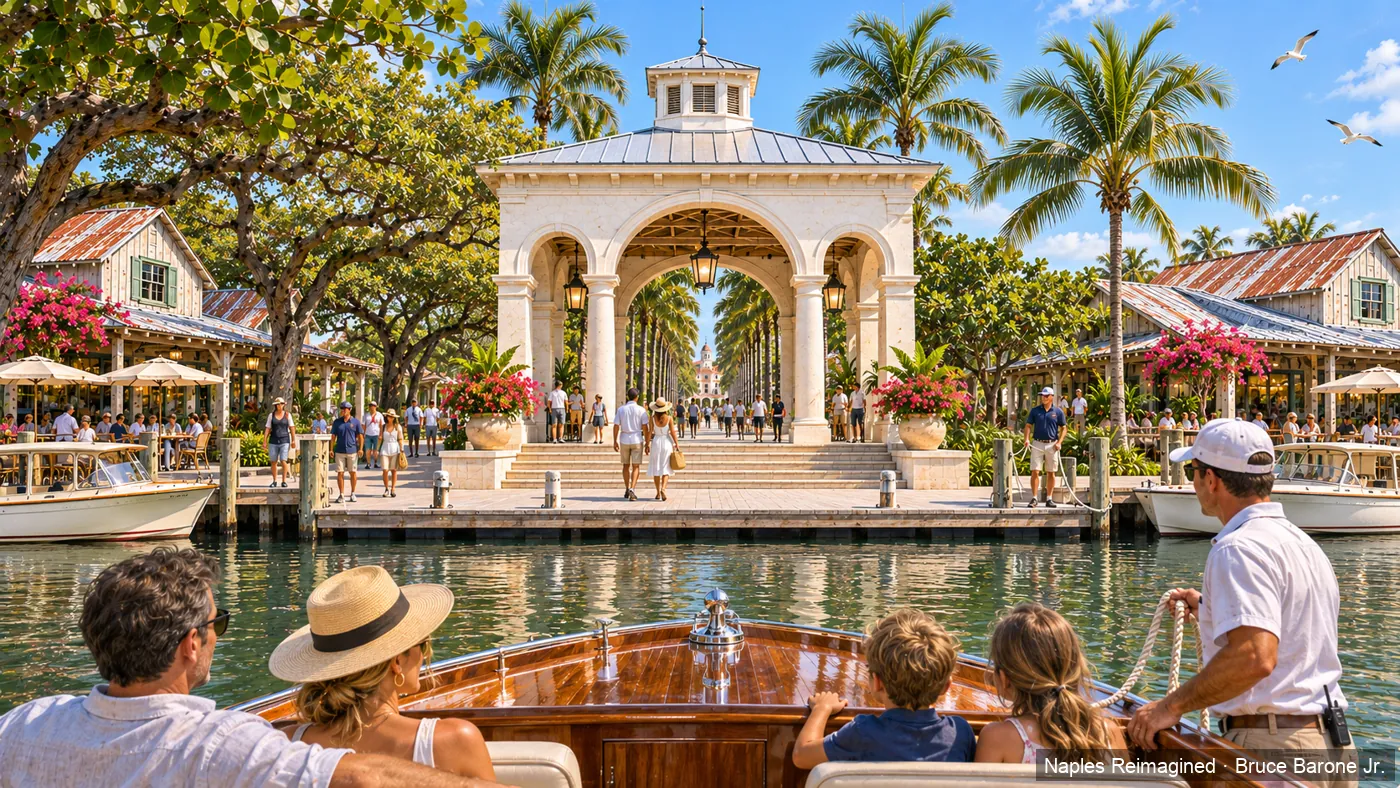
Imagine arriving at Tin City by water, stepping ashore into waterfront shopping, dining and shaded public space, then finding a welcoming route toward Bayfront, Fifth Avenue and the Design District. The arrival should be memorable, and the experience should keep rewarding you as you move into town. That is the showcase for Naples Reimagined.
The gateway idea
The idea began with my architectural thesis. I proposed a Naples Gateway that brought shops, restaurants, offices and a civic meeting place together at the threshold between land and water. Its waterfront face announced an arrival; its garden side served the life of the town. I want to develop that relationship into a connected district vision.
My design time is concentrated on Tin City and the Design District. Tin City brings the waterfront arrival and shopping experience. The Design District brings its own mix of small businesses, workshops, studios and neighborhood life. Each needs a distinct identity and a landmark that belongs to it. The connections between them should be as carefully designed as the destinations. Fifth Avenue, Third Street and our civic spaces remain part of the larger city ambition.
Naples Reimagined brings together architecture, urban design, real estate research and visual storytelling. Through Intelligence Desk, I am developing independent concepts for real places in Naples and testing the questions behind them. These concepts do not represent City proposals or approvals. What belongs here? Who would use it? What should remain? How would it work? What would it take to deliver?
The images help make those questions tangible. They let us see a street with deeper shade, compare two ways of shaping a square, or consider how a building might create a better place around it. Some are early explorations; others begin with actual drawings or site references. They need to be identified honestly. A convincing image can open a conversation. Establishing whether an idea fits a site takes records, measurements, professional work and the participation of the people affected.
I will work within the adopted City Charter and code, seek no variances and revise concepts that do not fit.
Before my master's thesis, I spent ten days in Italy studying Palladio. The thesis explored how a building's two faces could serve different parts of civic life while belonging to one composition. I want to carry that attention to proportion, courtyards, galleries and framed views into Naples Reimagined. Old Florida character, deep shade, colonnades and durable materials should make places comfortable and give them a long useful life. The architecture must respond to the waterfront's weather, flood conditions and maintenance demands as carefully as it responds to the view.
My work as Executive Director of the Fifth Avenue South Business Improvement District also taught me the value of a funded organization. Dedicated funding and an existing Community Redevelopment Agency framework gave the work a practical foundation. That experience shapes what I am considering now: how a committed local group could develop a shared vision, secure an appropriate role and help deliver it. The BID's 2020 annual report
I am concerned about how easily a city can change one project at a time without a clear conversation about the whole. A building may work within its property lines and still contribute little to the street. Two destinations can be close together yet feel disconnected. A place can become more expensive while becoming less useful to the people who live and work around it.
I want us to be more deliberate about those relationships. Growth should be judged by the life it makes possible: whether local businesses can operate, whether people can walk comfortably, whether public spaces invite people to stay, and whether the city retains a character that its residents recognize.
Connecting the districts
My thesis built on DPZ's earlier Fifth Avenue work, and Naples Reimagined should carry that continuity forward. DPZ's 2022 Design District planning describes the mid-block Design Walk, 10th Street as a connecting spine, and the importance of the district's small businesses and varied uses. The City's later Design Walk agreement is part of the implementation history to work from. I want to build on that foundation, resolve the real connections to Tin City and the waterfront, and contribute architecture that makes the whole more convincing. DPZ's Naples planning account · City Design Walk project
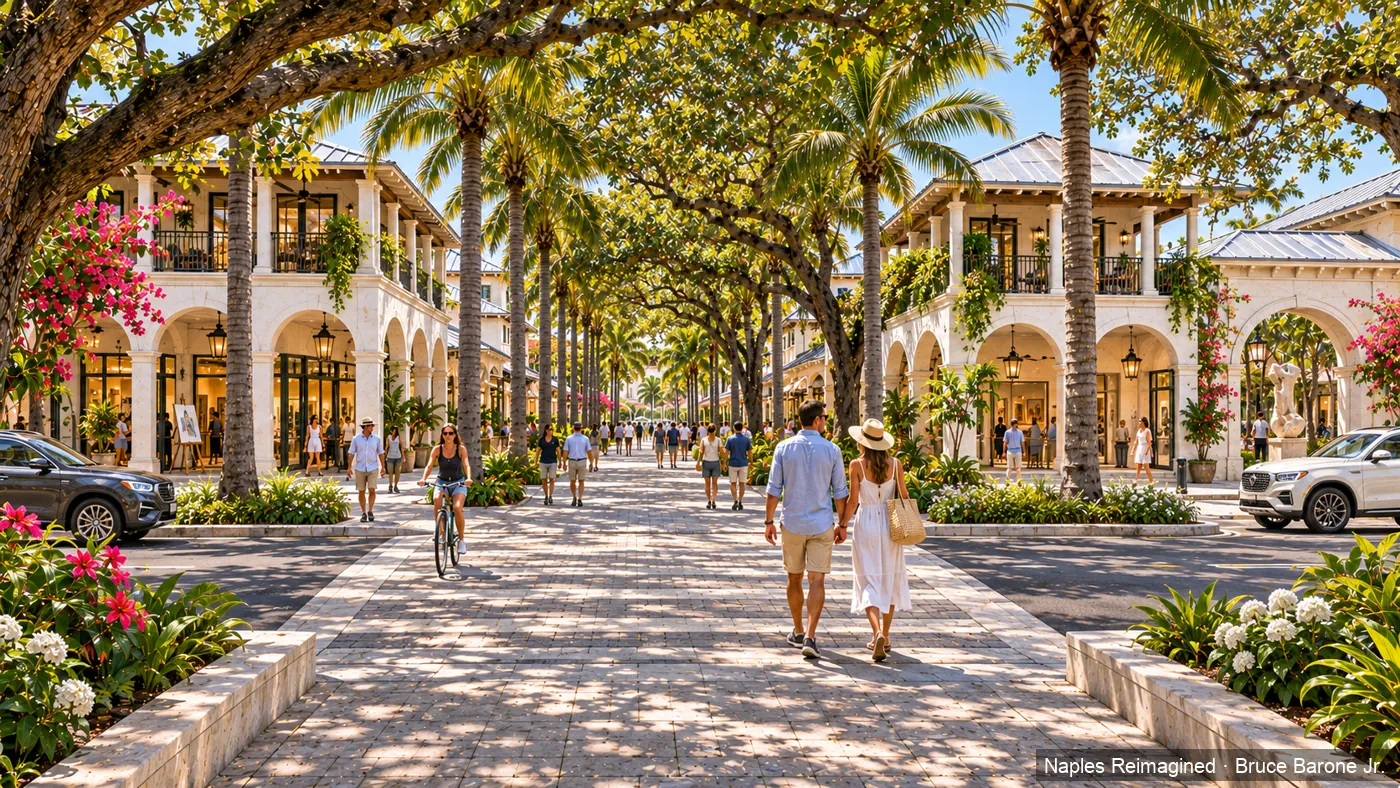
The Tin City arrival study should work from the boat, the street and the sidewalk. It explores the relationship between the water, gateway architecture, shopping and a shaded civic or garden side facing town. Tin City already has waterfront dining, shops and boating activity; the design should build on that life and respect the businesses already there. Proposed water connections must work in their navigation, landing rights, accessibility, ecology and operations. The walk after someone steps ashore matters just as much as the arrival.
The infrastructure deserves the same care as the architecture. I want to test solar and storage, hurricane resilience and mobility that can be operated and maintained well. Preserving free parking is a design goal; a connecting shuttle should have a credible operating model and the potential to contribute to district upkeep. My Smart Urbanism work asks what land, energy and capital produce for people, who benefits and who carries the costs. Bitcoin applications belong in that research where a specific use can demonstrate value and account for its local effects.
Shaping the work together
I want the community to become an active part of this work.
I want to bring together a new generation of locally rooted developers, bankers, architects, planners and business owners who want to help shape the Naples they are building their lives in. People who grew up here carry memories that deserve to inform its future. People building careers and raising families here have a long stake in what happens next. My proposal is a founding circle with a working role: challenge the Tin City and Design District alternatives, contribute practical knowledge and help establish what a strong proposal would take to deliver.
That founding circle should open a wider community process. I want residents, shopkeepers, tradespeople, artists, hospitality workers and families to identify places that need attention, explain what matters about them and see how their input changes the design. Longtime residents and people who have chosen to make Naples home bring essential perspectives. The process should show disagreements and tradeoffs alongside the attractive images, giving people a way to participate before a proposal is finished.
Funding should follow the design mission. Public programs, partnerships, philanthropy and resident support each have different roles and responsibilities. I want to examine those options against a defined scope, a credible budget and a clear owner or authority path. The district vision should determine which work is worth pursuing and how it could be delivered.
The work needs a clear public purpose and accountable governance. If Intelligence Desk or I have a paid role or ownership interest in a proposal, that interest should be disclosed and considered independently. Where a concept I publish touches a property I have an interest in, I will say so on the page. Public support and community participation carry responsibilities that deserve to be visible.
My goal is a credible path from the thesis to a connected place people can use. Develop the district vision, compare alternatives on actual sites, let community input improve them, and establish what each phase would cost, who could authorize it and who would look after it. A first deliverable should advance that larger purpose and protect the connections that make it work.
I believe Naples has people capable of doing this together. The next step is to find them and create a useful way to work.
If you use Tin City or the Design District, I want to hear where the connections break down and what gives those places their character. Which businesses, views and everyday experiences should we protect? What would make the walk between destinations worth taking? And what experience, knowledge or practical help could you bring?
Naples Reimagined is my invitation to take those questions seriously—and begin answering them in public.